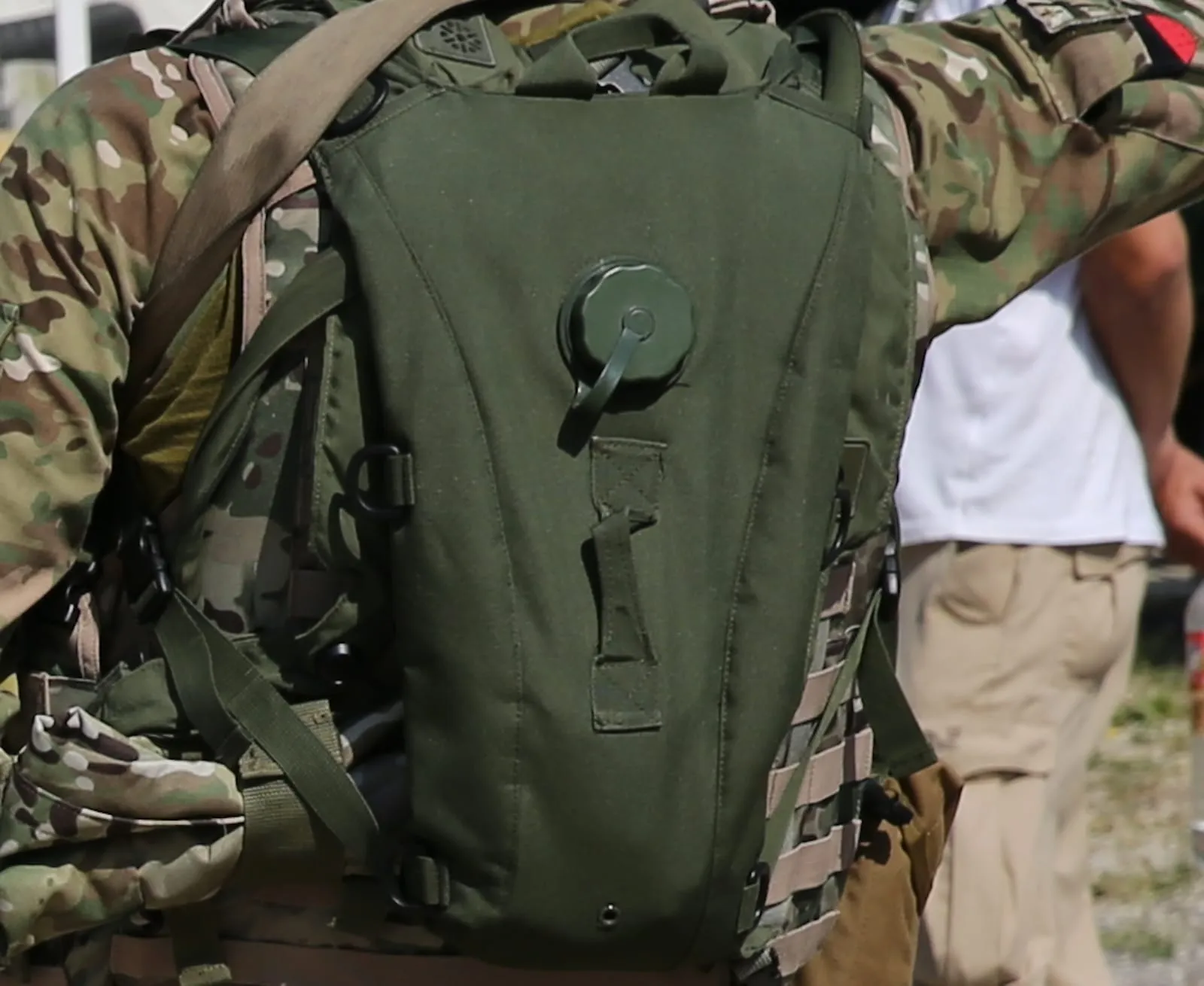

Quick answer: for Arizona trails, carry more water than you think you need, in a pack that holds at least 2 liters plus room for a bottle of electrolyte drink and salty snacks. Hike early or late, and turn around well before your water runs out [2]. A hydration pack makes it easier to sip steadily instead of waiting until you’re thirsty. It doesn’t make a hot hike safe on its own.
Heat kills more Arizonans every year than it did a decade ago. The Arizona Department of Health Services counted 977 heat-related deaths in 2024, up from 151 in 2013, and more than 45% of 2024’s deaths happened in July [1].
At a glance
- Heat-related deaths in Arizona, 2024
- 977 (990 in 2023) [1]
- Share of 2024 heat deaths in Maricopa County
- About 63% [1]
- Hikers rescued from Phoenix parks and preserves
- More than 200 a year [2]
- Grand Canyon inner-canyon summer temperatures
- Can exceed 110°F; avoid hiking 10 a.m. to 4 p.m. [3]
- CDC advice for people active in heat
- Drink more water than usual; don't wait until you're thirsty [4]
What Arizona officials say about water on the trail
Phoenix Parks and Recreation: bring plenty of water, more than you think you need, and turn around and head back to the trailhead before you drink all of it. Hike in early mornings and evenings when it’s cooler. More than 200 hikers are rescued from the city’s desert and mountain parks every year [2].
Grand Canyon National Park: carry water plus electrolytes, eat salty snacks such as pretzels and crackers, and plan not to be hiking between 10 a.m. and 4 p.m. Inner-canyon temperatures can exceed 110°F, temperatures in the sun run 15 to 20 degrees hotter than shade readings, and most heat-illness emergencies involve people hiking in the middle of the day. Only two trails have water spigots, and they can be out of service [3].
CDC: for anyone active in heat, drink more water than usual and don’t wait until you’re thirsty; schedule activity earlier or later in the day, and stop and get somewhere cool if you feel faint or weak [4].
Long-time residents aren’t immune. ADHS found that more than 55% of Arizona residents who died of heat-related illness in 2024 had lived in the state for 20 years or more [1].
How we chose
- At least 2 liters of reservoir, the low end for a desert day hike, with options up to about 3 liters.
- Room for more. Side pockets or cargo space for a second bottle (for electrolytes), snacks and a layer.
- A ventilated back panel, since the pack sits against your back all day.
- Specs from the maker. Capacity, weight and features come from CamelBak’s product pages.
- Recall check. We searched the Consumer Product Safety Commission recall database on November 2, 2026 [9].
All four picks are CamelBak packs. Other brands make good packs, but CamelBak was the only maker whose current product pages we could check for specs when we wrote this.
Our picks
Best for: All-day desert hikes and long trail days
CamelBak Fourteener 26 Hydration Hiking Pack (3L Crux reservoir)
It pairs a 3-liter reservoir with a hip belt, side stretch pockets for extra bottles, and a suspended mesh back panel that sits away from your back for airflow.
- 3L Crux reservoir [5]
- Air Support Max back panel; hip belt; sternum strap [5]
- Side stretch pockets; trekking pole attachment [5]
- 52 x 26 x 31 cm; 810 g [5]
Safety check: CamelBak's only CPSC recall in the database is for 2021 water bottle caps, not hydration packs (checked 2026-11-02) [9].
Watch out: It's the heaviest pack here, and 3 liters of water adds about 3 kilograms. CamelBak also makes a women's Fourteener.
See it on Amazon → We chose it from specs and safety records; we haven't tested it ourselves.
Best for: Mountain biking on desert trails
CamelBak M.U.L.E. 12 Hydration Pack (100 oz)
It's built for riding, with a 100-ounce reservoir, a helmet carry, tool pockets and a removable waist strap to keep the load steady.
- 100 oz reservoir with Quicklink disconnect [6]
- Air Support back panel; 3D vent mesh harness [6]
- Magnetic tube trap; helmet carry [6]
- 47 x 6.3 x 21 cm; 780 g [6]
Safety check: CamelBak's only CPSC recall in the database is for 2021 water bottle caps, not hydration packs (checked 2026-11-02) [9].
Watch out: Cargo space is limited to tools, a layer and snacks, so a second bottle has to ride on the bike.
See it on Amazon → We chose it from specs and safety records; we haven't tested it ourselves.
Best for: Hikers who want to add a second reservoir or bottles
CamelBak Rim Runner X22 (1.5L Crux reservoir)
It has an internal reservoir sleeve, side stretch pockets that expand for an extra bottle, and cargo compression, so you can carry the included reservoir plus more water.
- 1.5L Crux reservoir included [7]
- Recycled 210D nylon double ripstop [7]
- Side stretch pockets; removable stability belt [7]
- 55 x 21 x 29 cm; 690 g [7]
Safety check: CamelBak's only CPSC recall in the database is for 2021 water bottle caps, not hydration packs (checked 2026-11-02) [9].
Watch out: 1.5 liters alone isn't enough for a hot Arizona hike; plan to fill the side pockets or swap in a bigger reservoir. Women's version: X20.
See it on Amazon → We chose it from specs and safety records; we haven't tested it ourselves.
Best for: Short early-morning hikes and city rides
CamelBak Classic Light (70 oz)
At 410 grams it's the lightest pack here, with a 2-liter reservoir, a ventilated harness and reflective details for dawn and dusk.
- 2L Crux reservoir with Quicklink disconnect [8]
- 2 liters of cargo space [8]
- Air Support Light back panel [8]
- 40 x 16 x 23 cm; 410 g [8]
Safety check: CamelBak's only CPSC recall in the database is for 2021 water bottle caps, not hydration packs (checked 2026-11-02) [9].
Watch out: Two liters of cargo is only enough for keys, a phone and a snack. Not for long or remote hikes.
See it on Amazon → We chose it from specs and safety records; we haven't tested it ourselves.
Buying guide
- Size the water to the trip, then add more. Phoenix’s rule of thumb is to turn back before your water runs out [2].
- Carry electrolytes and salty snacks. Grand Canyon rangers recommend both for long hikes [3]; a side pocket for a second bottle helps.
- Look for a ventilated back panel. All four picks have one.
- Clean and dry the reservoir between trips. Follow the maker’s care instructions.
Sources
- Arizona Department of Health Services: Heat-Caused & Heat-Related Deaths in Arizona, 2013-2024
- City of Phoenix Parks and Recreation: Take a Hike. Do it Right.
- National Park Service, Grand Canyon: Hike Smart
- CDC: Heat and Athletes
- CamelBak: Fourteener 26 Hydration Hiking Pack with Crux 3L Reservoir
- CamelBak: M.U.L.E. 12 Hydration Pack 100 oz
- CamelBak: Rim Runner X22 Hiking Hydration Pack with Crux 1.5L Reservoir
- CamelBak: Classic Light 70oz
- U.S. Consumer Product Safety Commission: Recalls (searched November 2, 2026)
- National Weather Service: Heat Illness
Common questions
How much water should I carry on an Arizona hike?
Officials don't give one number because it depends on heat, distance and your body. Phoenix's parks department says to bring more water than you think you need and to turn back before you've drunk it all. Grand Canyon rangers advise carrying water plus electrolytes and salty snacks.
When is the safest time to hike in Arizona's heat?
Early morning or evening. Phoenix advises hiking when it's cool, and Grand Canyon rangers say to avoid hiking between 10 a.m. and 4 p.m. in summer, when most of their heat-illness emergencies happen.
What are the signs of heat stroke?
The National Weather Service lists a throbbing headache, confusion, slurred speech, a body temperature above 103°F, hot red, dry or damp skin, a rapid strong pulse, and fainting. Call 911 right away; the NWS says not to give fluids to someone with heat stroke.